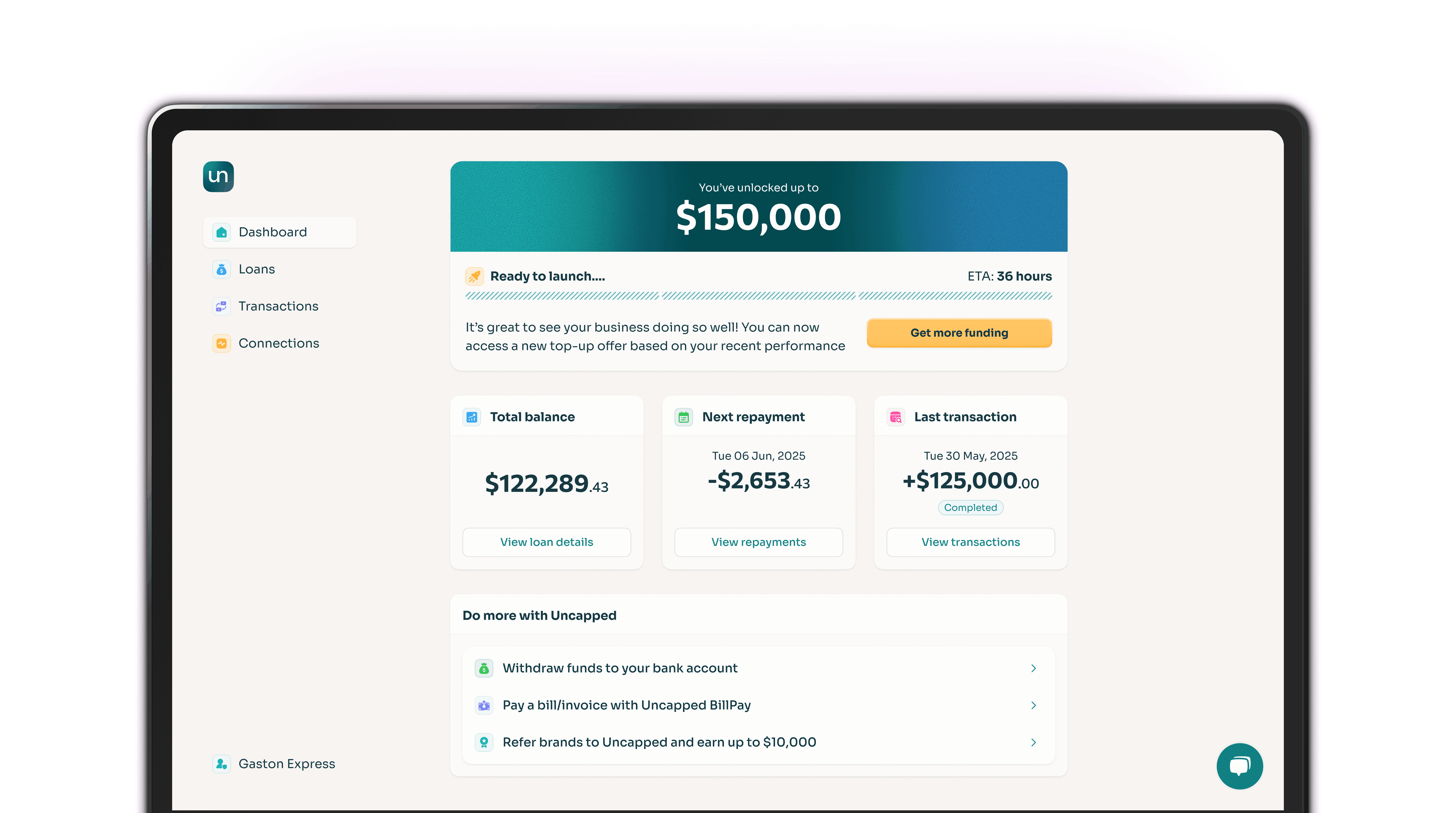
Uncapped are a B2B alternative funding provider using open banking and other third-party connection APIs to underwrite lending for online ecommerce and SaaS businesses.
Designing for growth while scaling data connections
Designed for
Uncapped
Date
2023-2024
Role
Lead Product Designer
Goals & Impact
Target:
Increase lending volumes by 30%
Result:
75% increase during 2024
Target:
Increase banking connections by 20%
Result:
30% increase during 2024
Target:
Reduce cost of acquisition by 10%
Result:
25% decrease during 2023/24
Target:
Reduce missing data ratio by 20%
Result:
40% decrease by mid 2025
Research methods
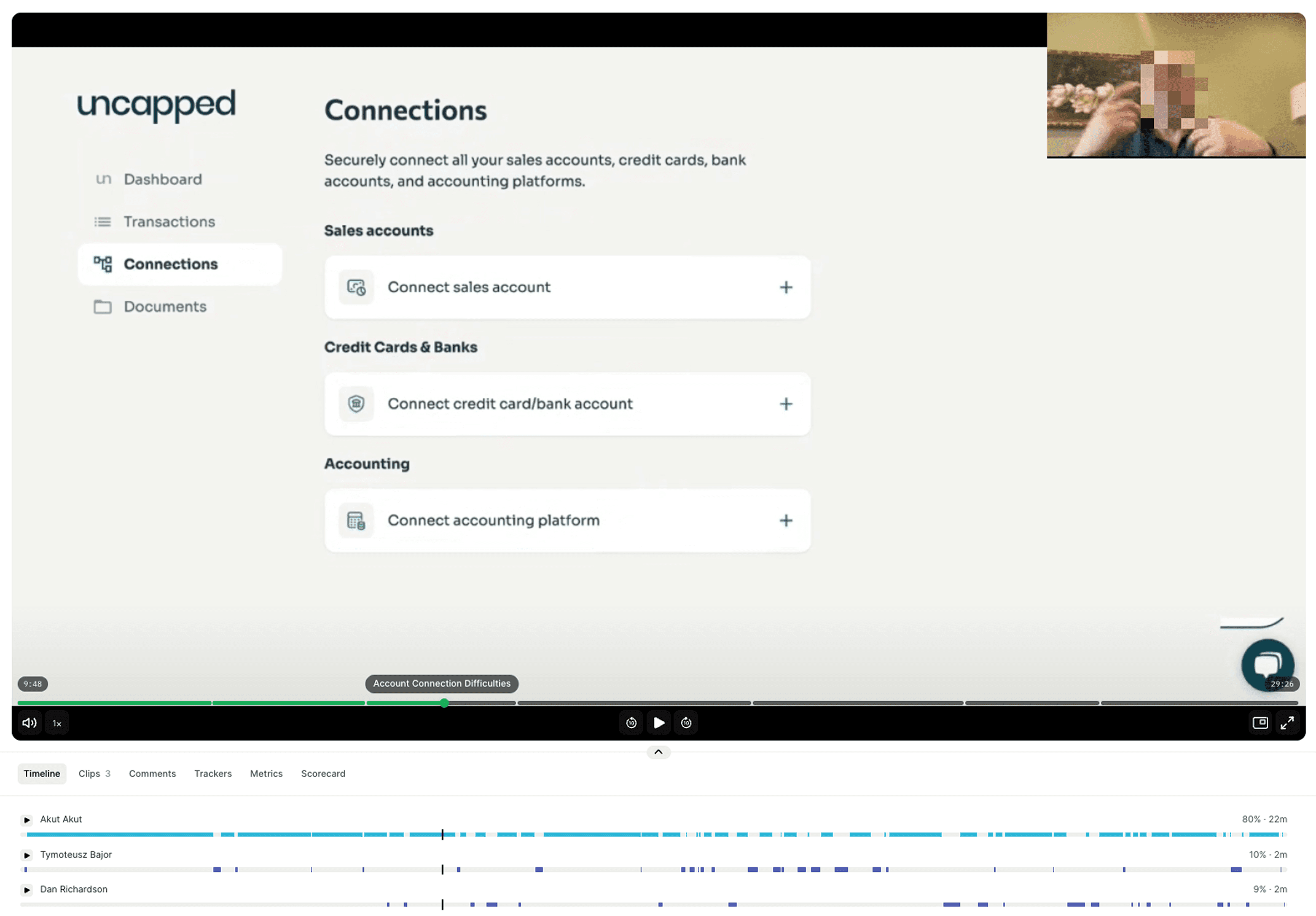
User interviews recruited via abandoned cart emails and in product surveys
In-product surveys with Session IDs
Daily reviews of session recordings targeting IDs from surveys
Tested onboarding journeys with new employees who had low familiarity with the product
Tested new designs using unmoderated tools like Lysnna with heavily screened participants
Interviewed and prototype testing with sales and underwriting teams
Identified problems
Onboarding had no clear review state where customers could check their data
Poor internal tooling was slowing down underwriting
Customers had a low understanding of Uncapped's automated analysis methods, leading to assumptions that submitting patchy financial data had no consequences for their application
The 'path of least resistance' often resulted in customers skipping steps
Customer received poor feedback about the progress of their application
The customer portal wasn't optimised for reengagement
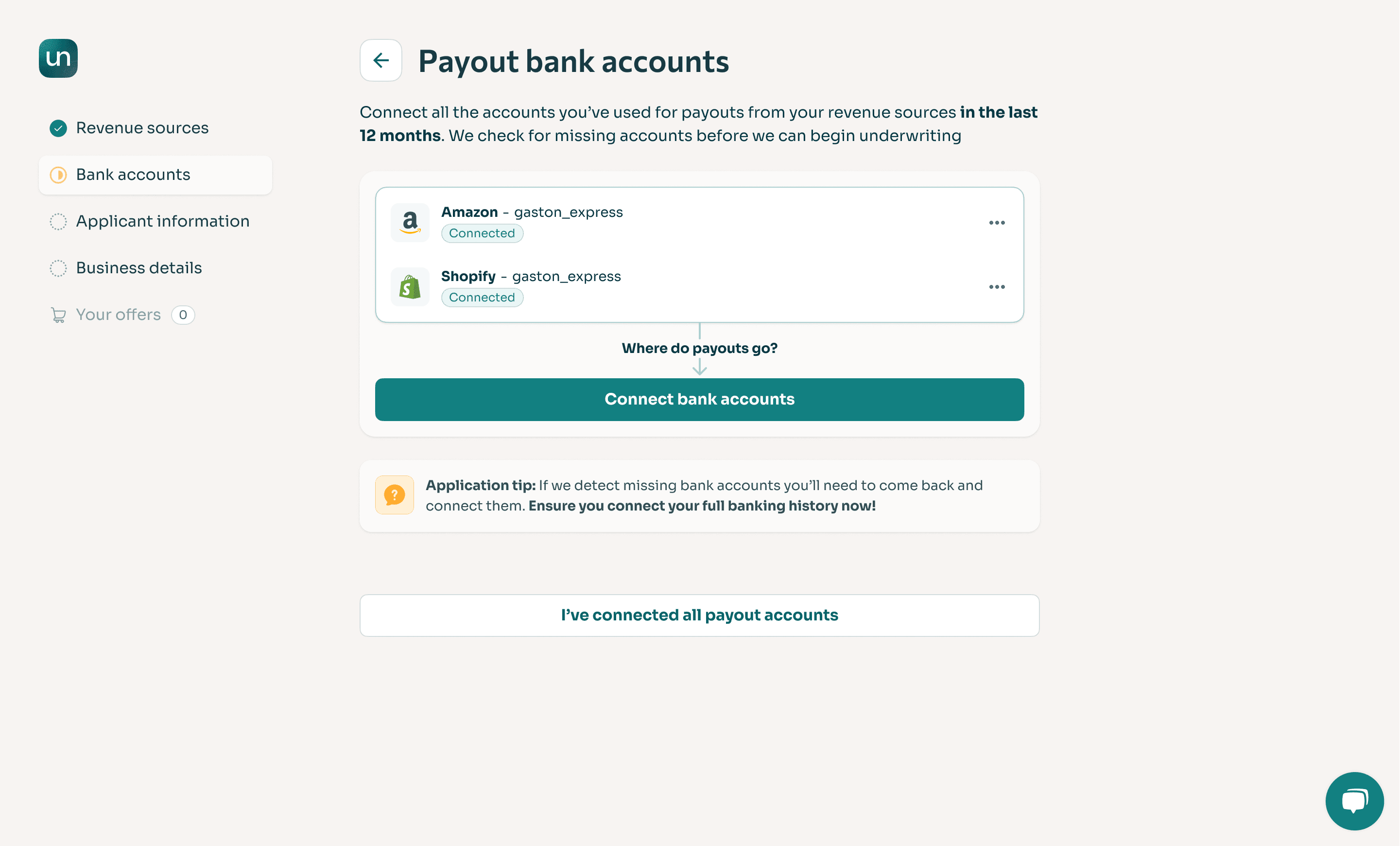
Visually associating bank accounts with revenue sources
The most important data point we needed was the bank account connection where customers sent payments from their sales platforms.
After experiming (and failing) with ever increasingly strong messaging, I redesigned the screen to visually connect the sales platforms with the question "Where do payouts go" and the button to launch Plaid, our bank connection provider.
Detecting missing accounts
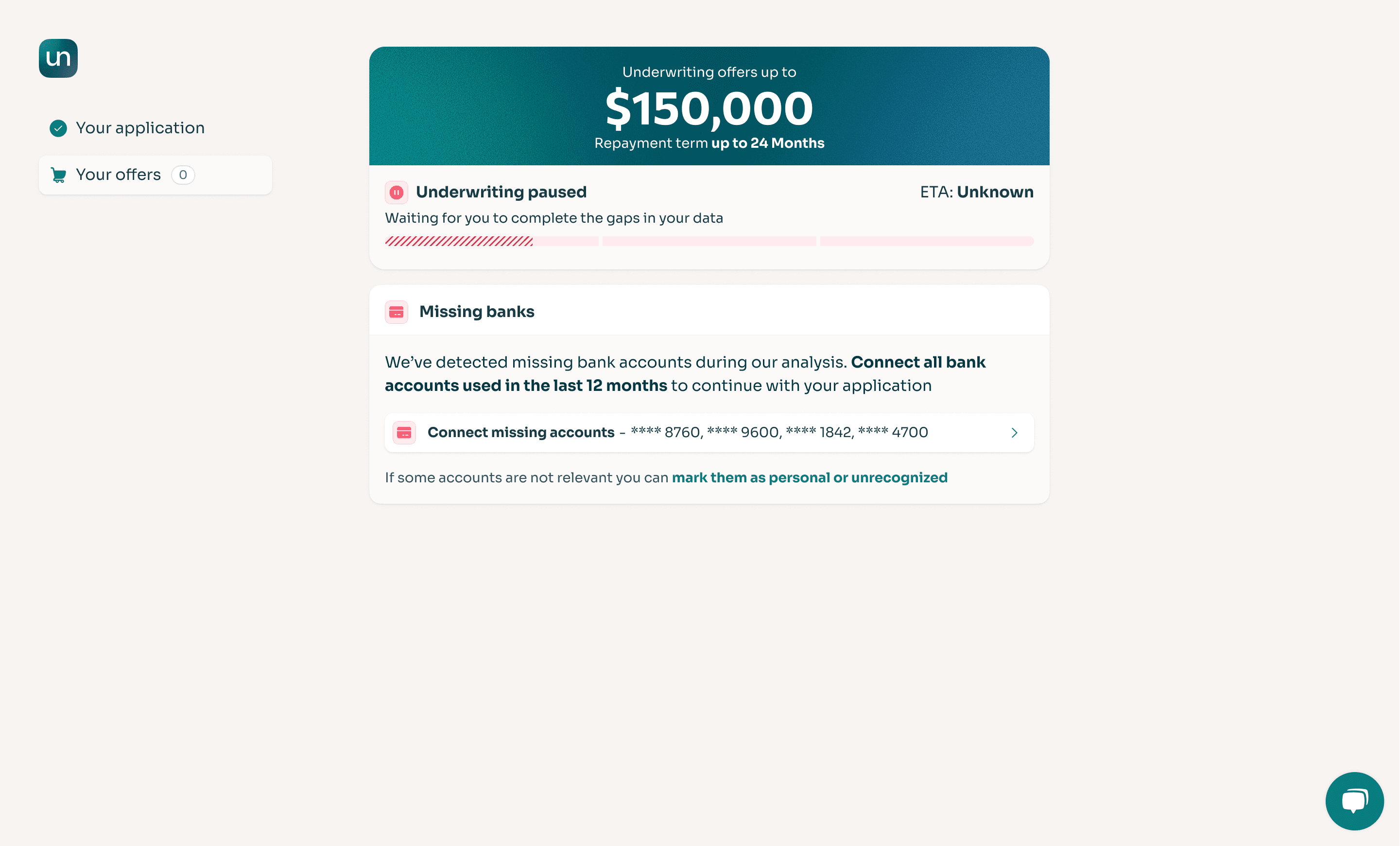
The engineering team worked hard to develop detection methods which matched transactions from sales connections with bank accounts we didn't have connected yet. I completely overhauled the Pre-Offer experience to provide a method for customers to connect missing accounts without going through time-consuming communications with underwriters.
Allowing customers to review their data
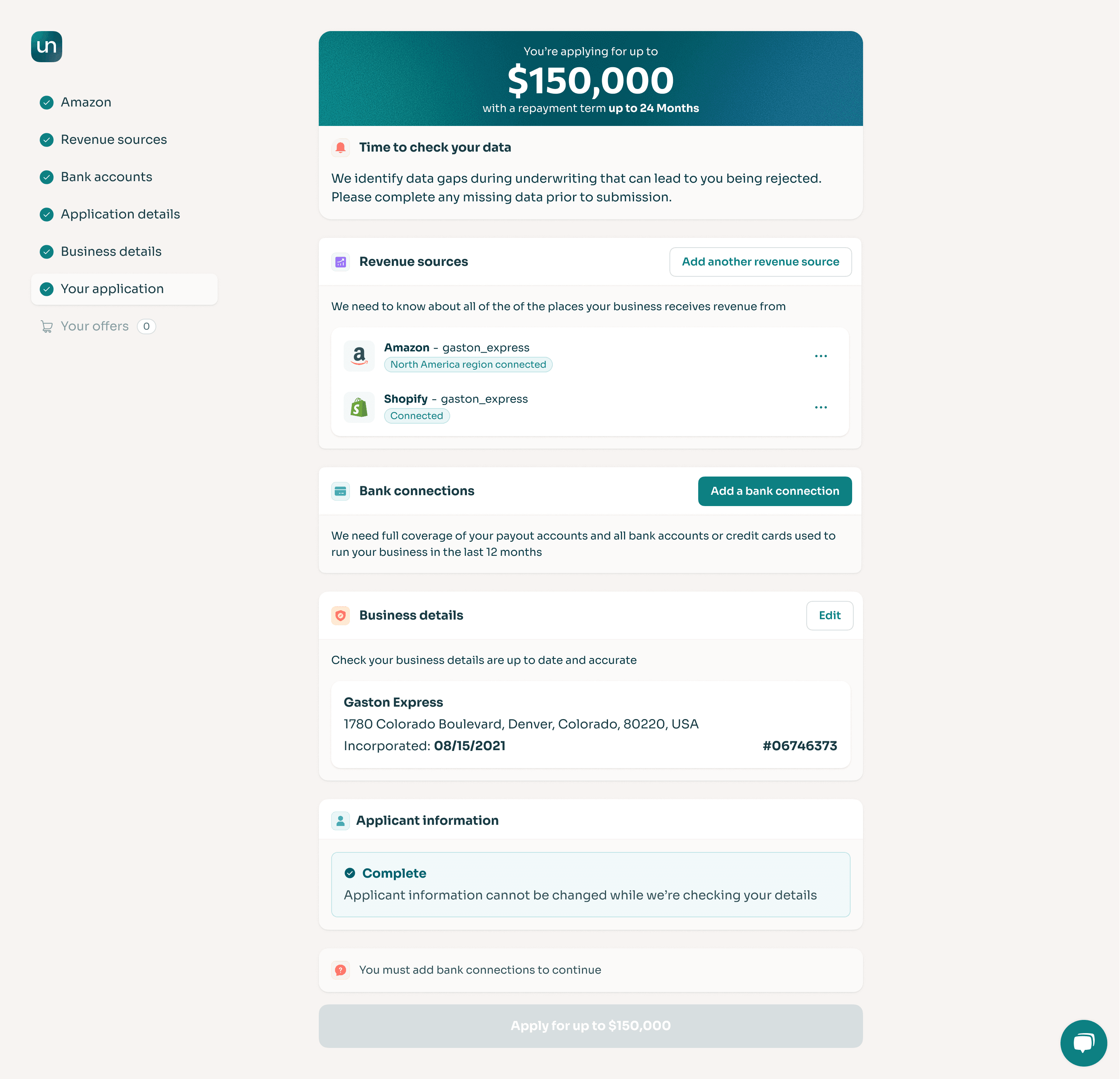
Lots of customers, skip through the application like "window shoppers" without adding everything we needed. In our efforts to remove steps from onboarding, we had neglected to allow customers to review their data meaning they ended up submitting their application before they were ready.
I designed a new overview screen where it was clear the application was about to be submitted so customer to fill in the gaps and we could request anything we knew was missing.
A new end of application experience
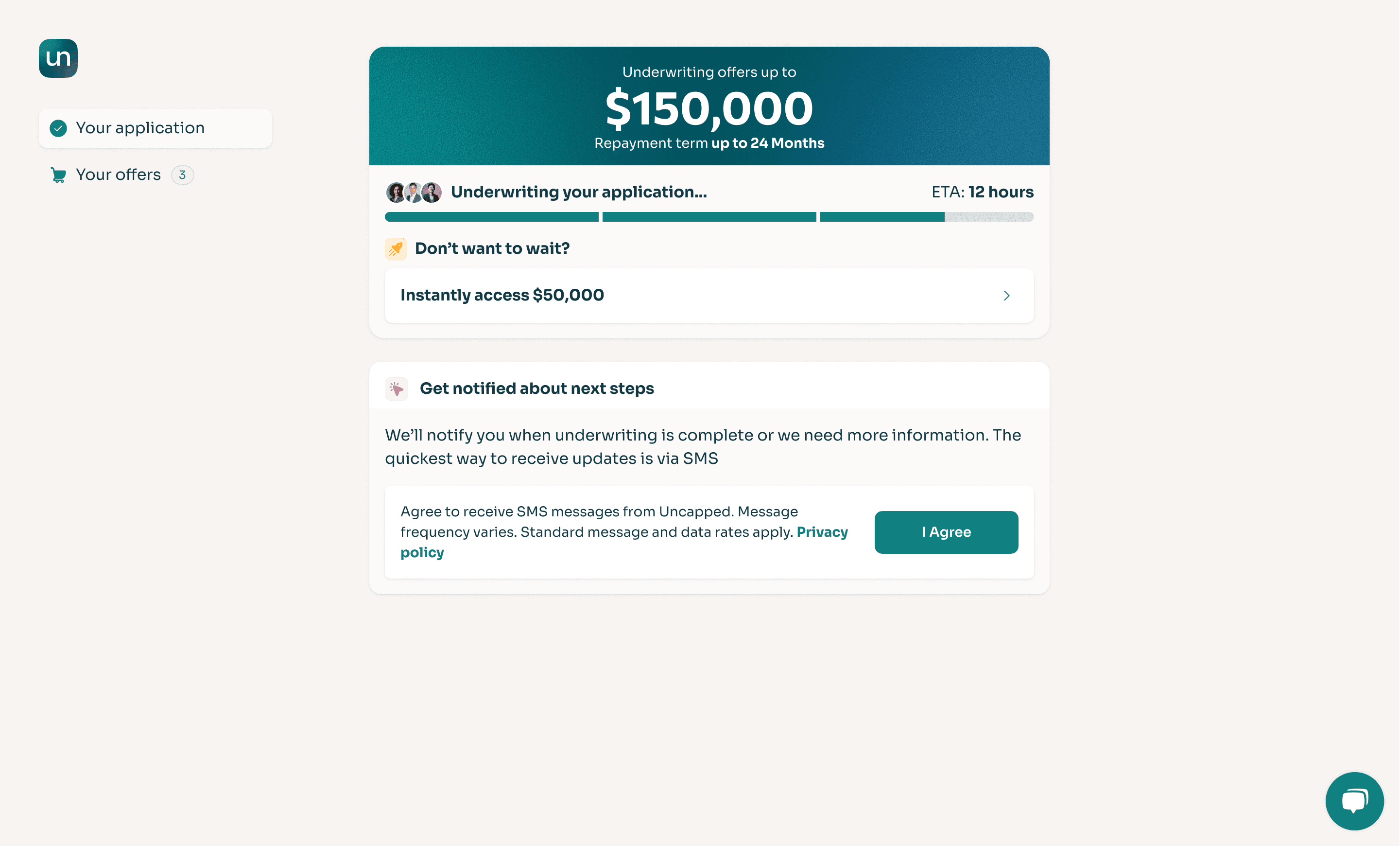
We knew that customer hated waiting for underwriting. So as part of the new end of application experience I designed progress updates which provided customers with live information about the status of their application and when they could expect an offer.
We also used this as a opportunity to provide lower "instant" offers to customers who didn't want to wait and utilized SMS to improve offline notification methods.
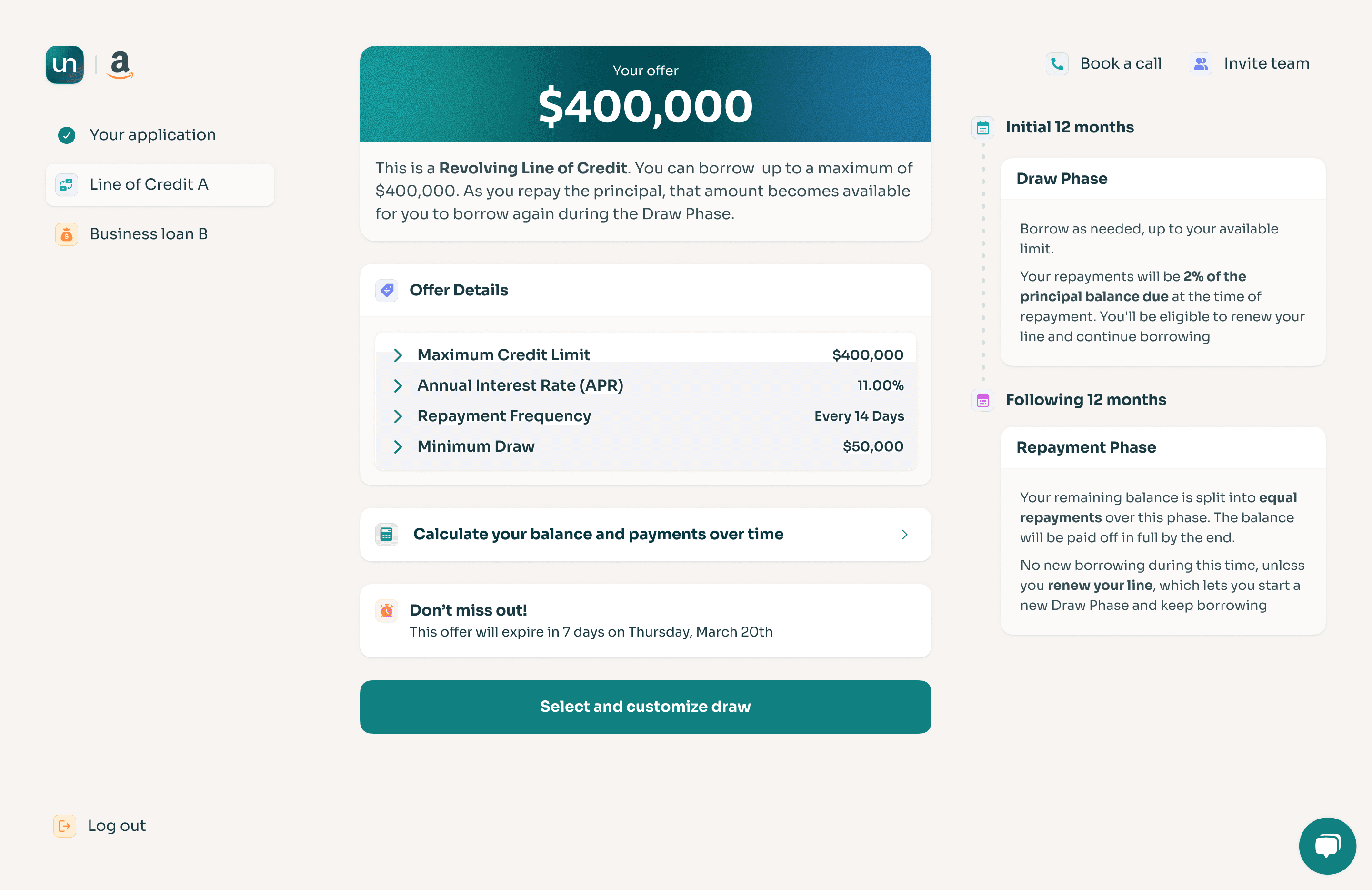
An engaging offer experience
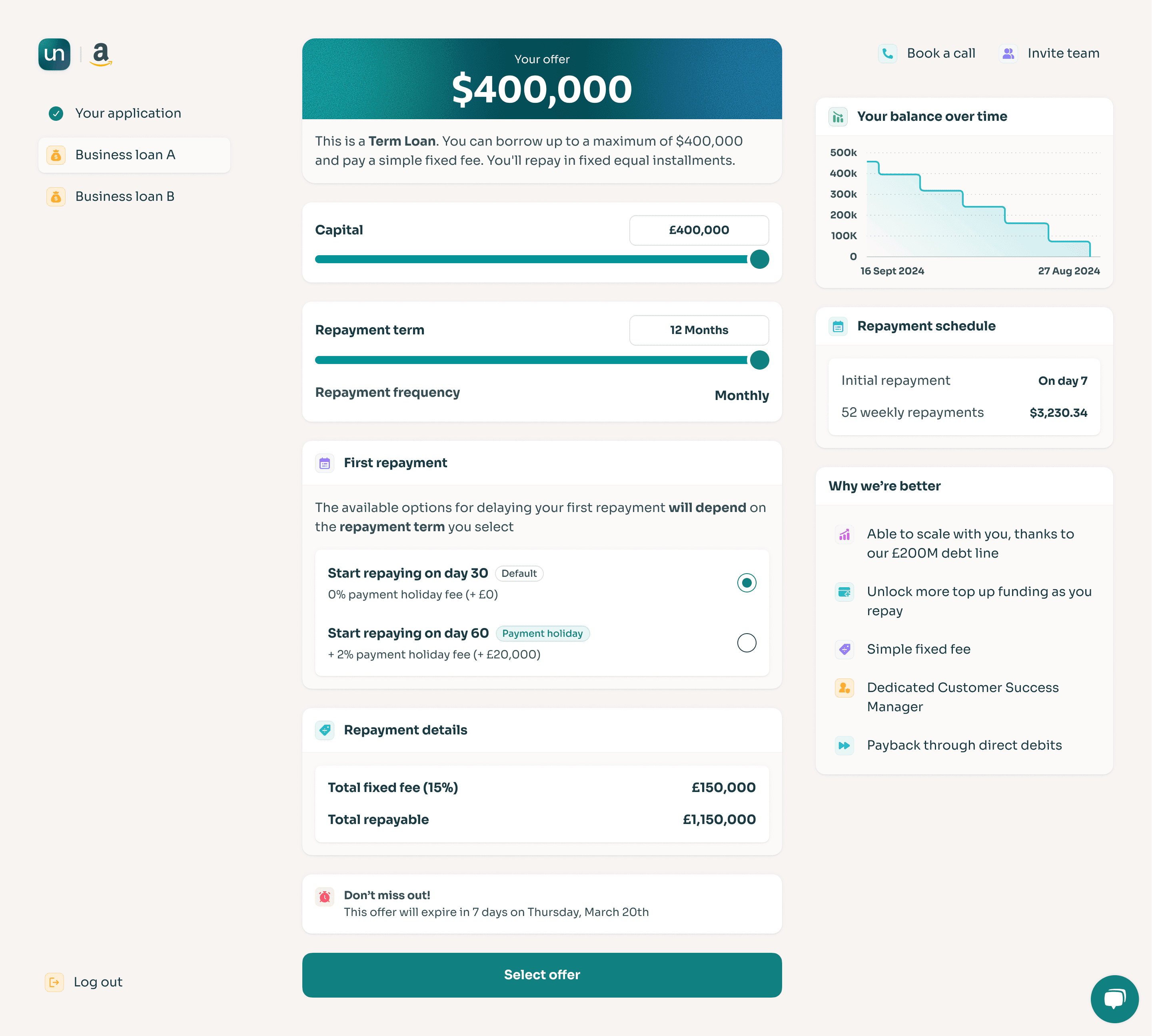
After positive results from the new application screens, we rolled out updated UI across a suite of offer screens too.
Improving internal tools
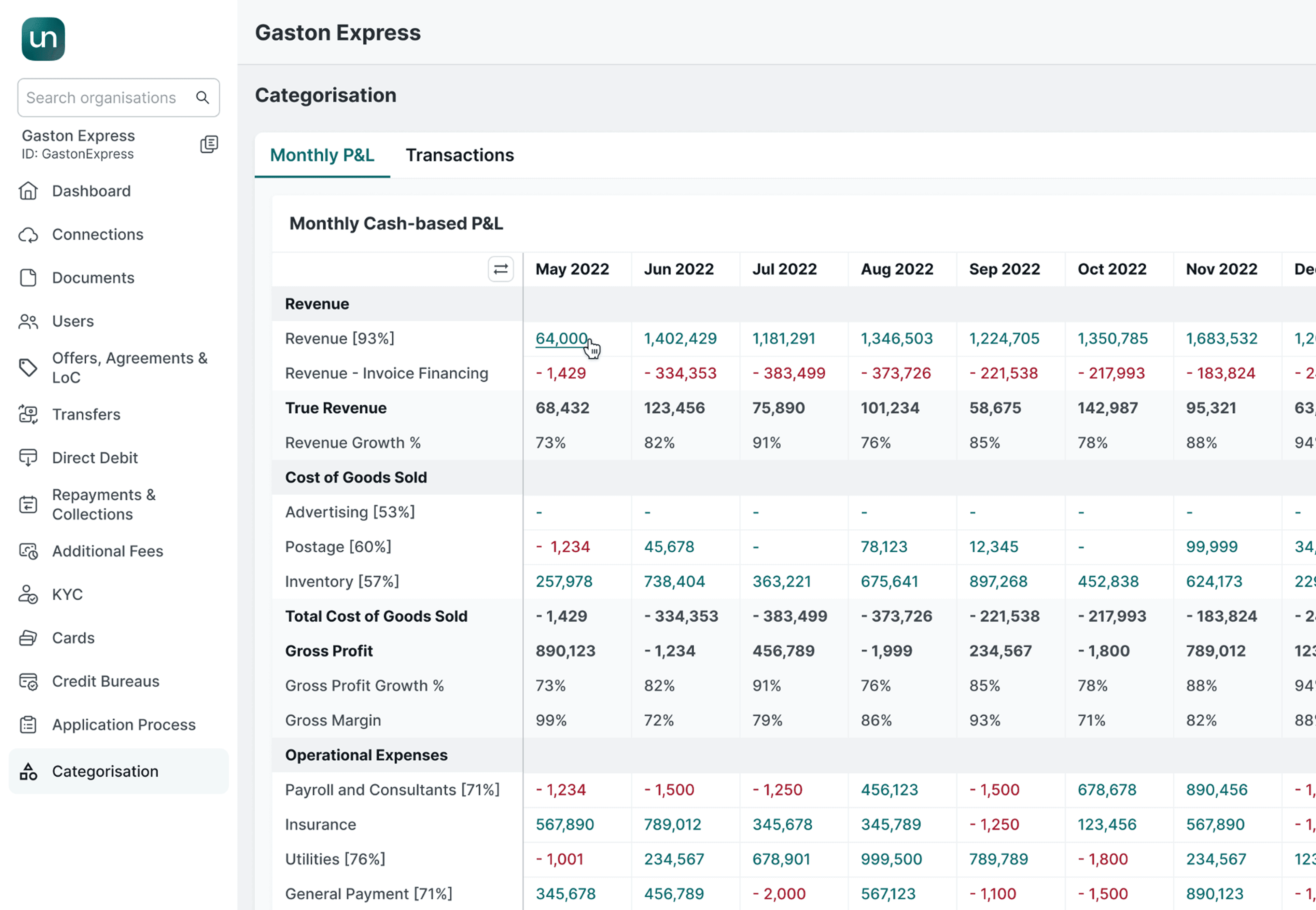
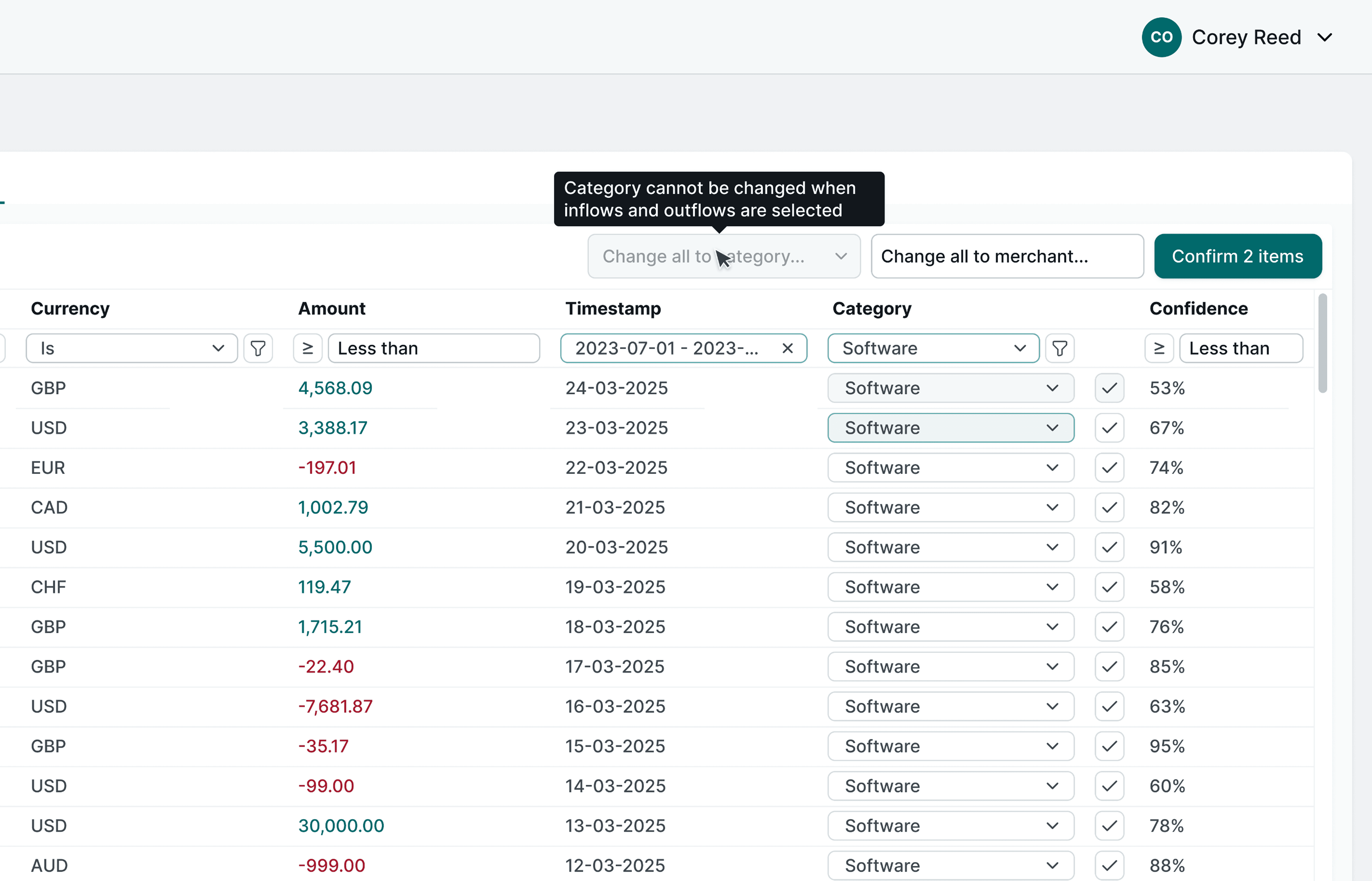
Much of the tooling had been designed and built by engineers leading to big usability issues. I created a new lightweight UI-Kit and worked with the Frontend team to update back office components.
We used the new components to design in-house underwriting tools like transaction categorisation and filtering to help underwriters make sense of messy transaction data
Team
Frontend Development